


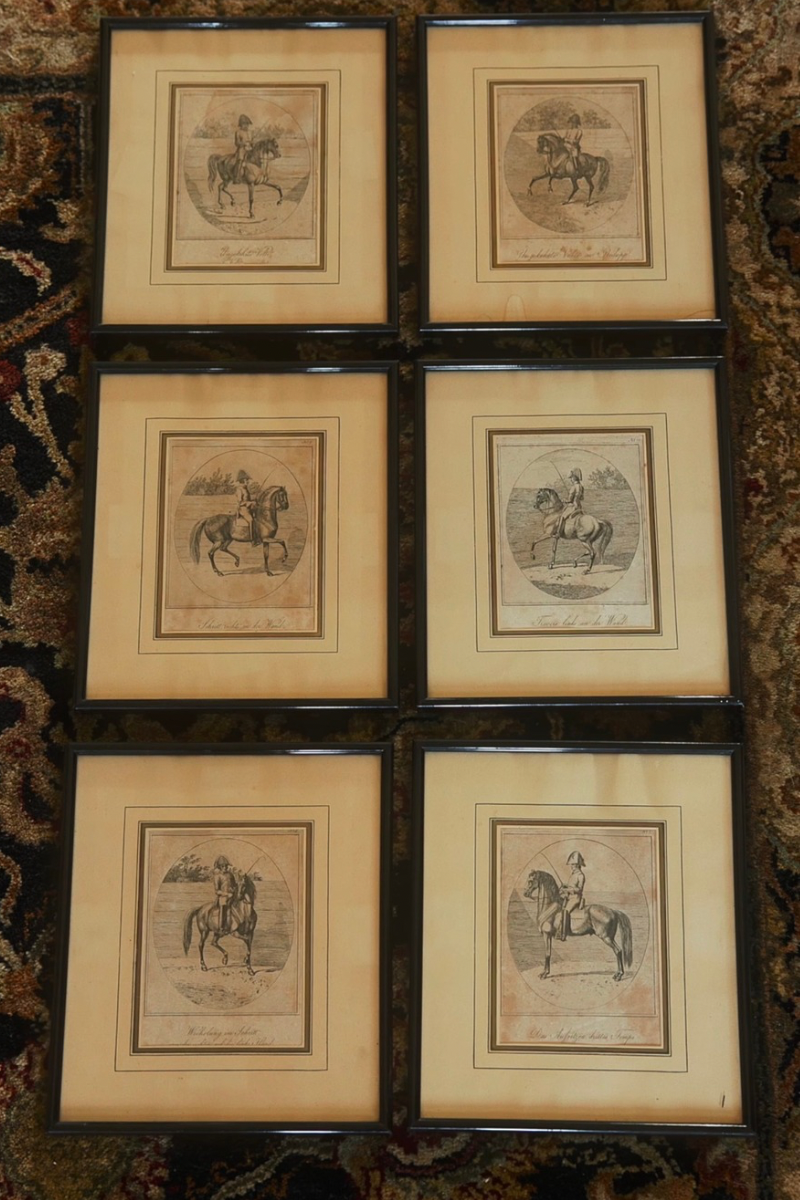
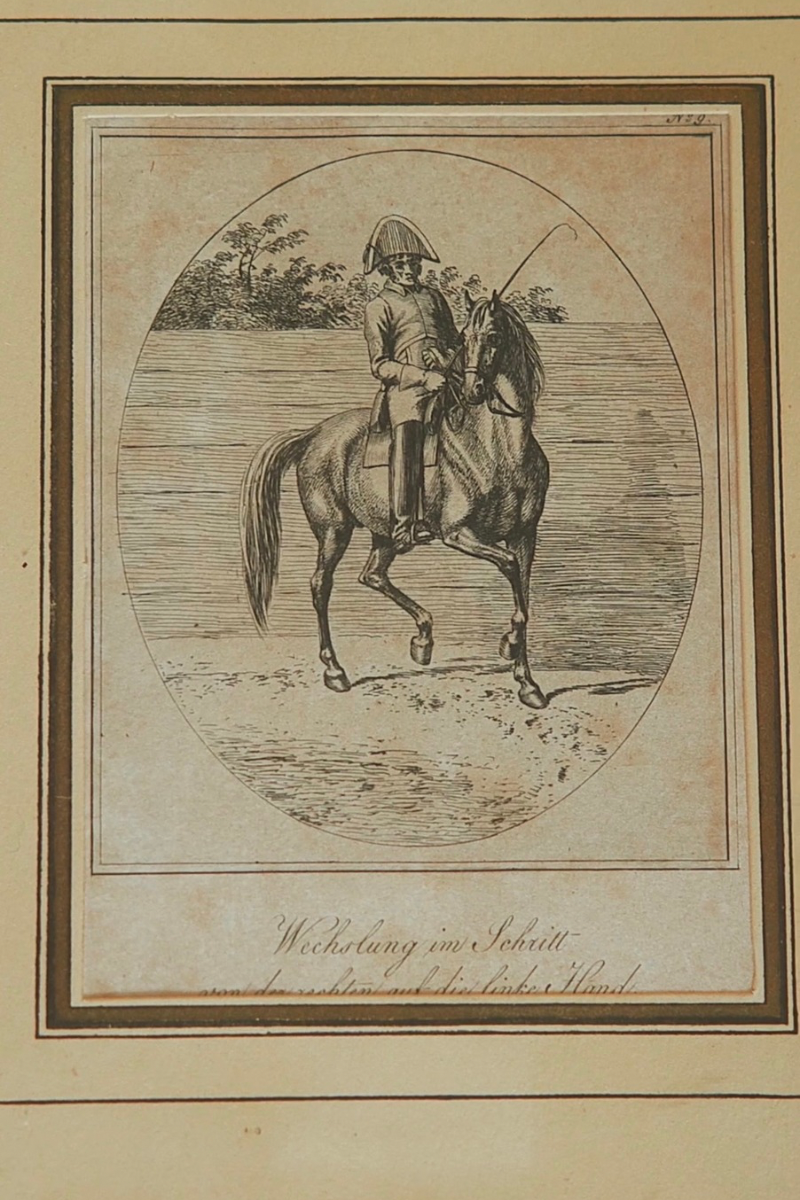
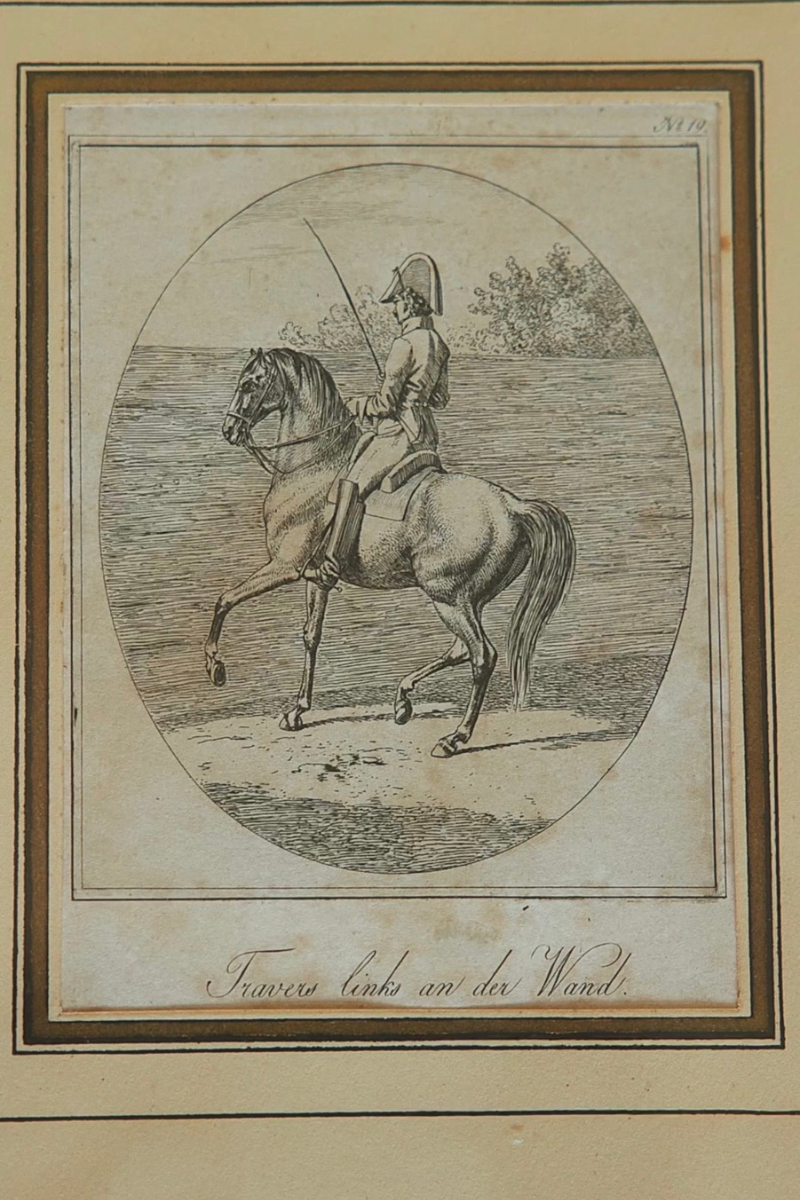
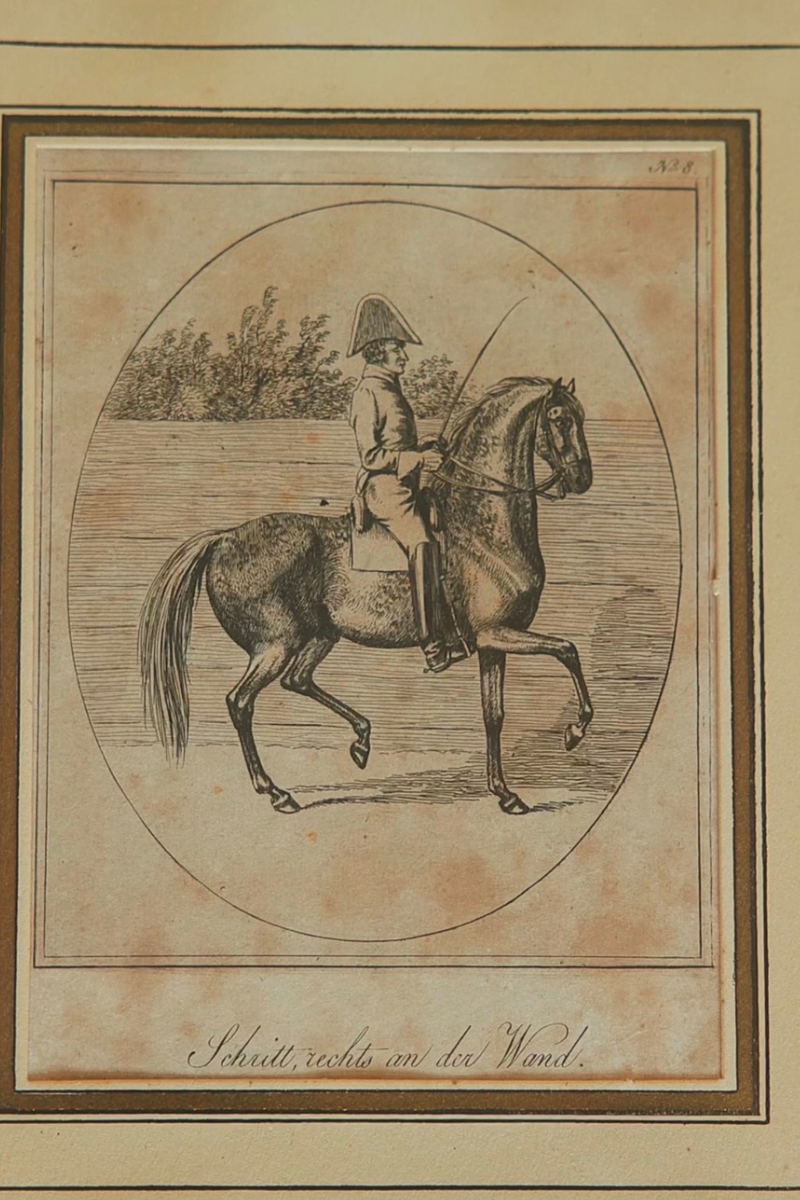
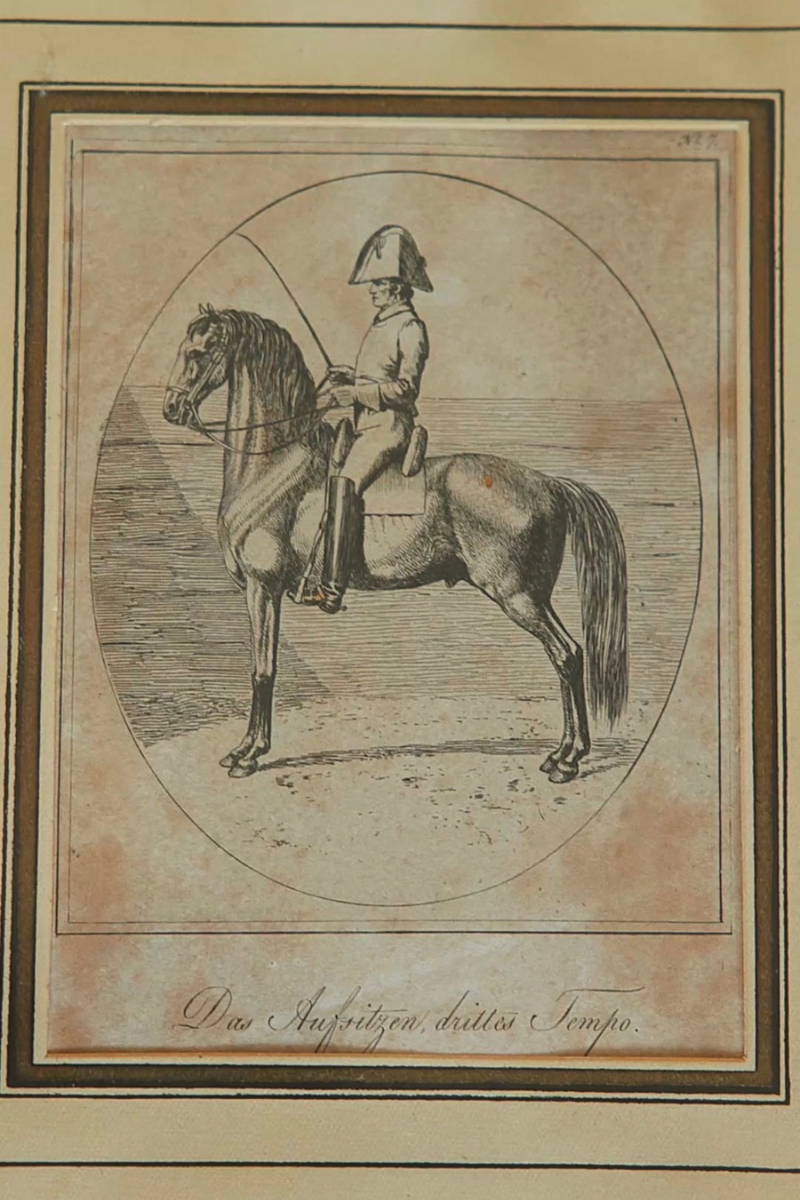
Set of Six Early 19th-Century German Equestrian Instructional Engravings Depicting Mounted Horse
This exceptional set of six German equestrian instructional engravings originates from the early 19th century, a period when horsemanship was both an essential skill and an refined art form across European society. Germany emerged as a significant center for equestrian education during this era, building upon centuries of tradition in cavalry training and classical riding techniques.
These engravings were created as educational tools, designed to instruct riders in proper mounted positions, gaits, and horsemanship fundamentals. The early 19th century marked a pivotal moment in equestrian literature and illustration, as the democratization of printing techniques allowed instructional materials to reach a broader audience beyond the aristocratic elite who could afford private riding masters.
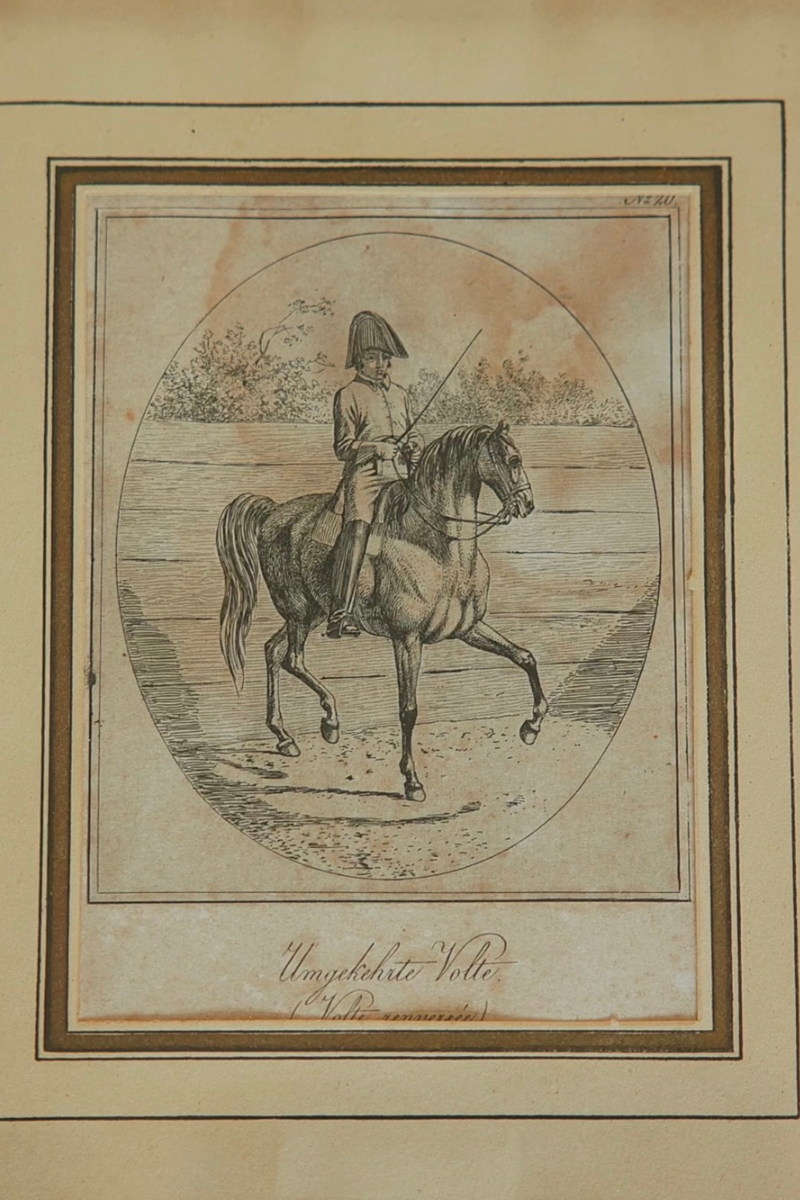
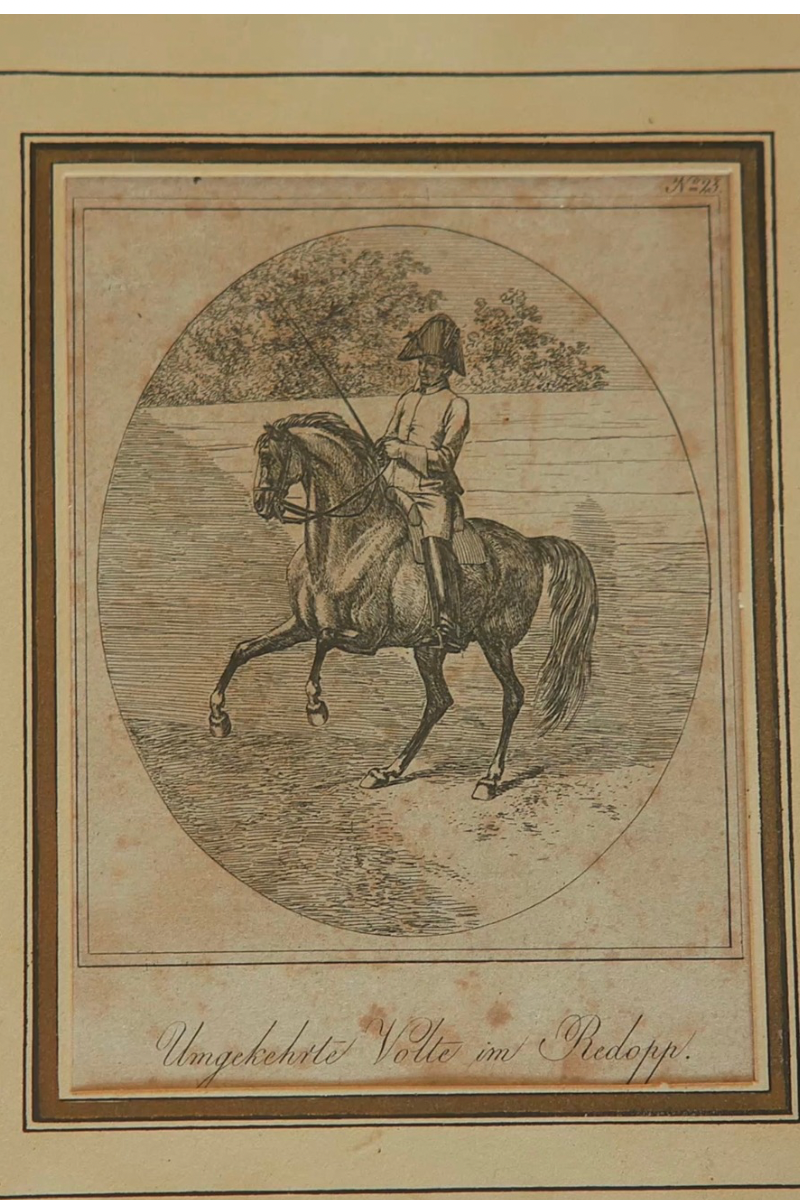
The artistic quality and technical precision evident in these engravings reflect the German commitment to documenting equestrian excellence. Each plate captures specific moments in horsemanship instruction, likely illustrating various commands, transitions, or classical movements. The composition and anatomical detail demonstrate the engraver's understanding of both horse physiology and human form in motion.
These prints represent valuable documentation of 19th-century riding methods and serve as both historical artifacts and artistic renderings of an important cultural practice. Their preservation offers contemporary viewers insight into how horsemanship was taught, valued, and visualized during this significant period in European equestrian history.
Measurement's: 8" L x 9.25" H x 0.5" D
Notes: Some Present Foxing on Engravings - Overall great patina, character and charm
Choose options
