

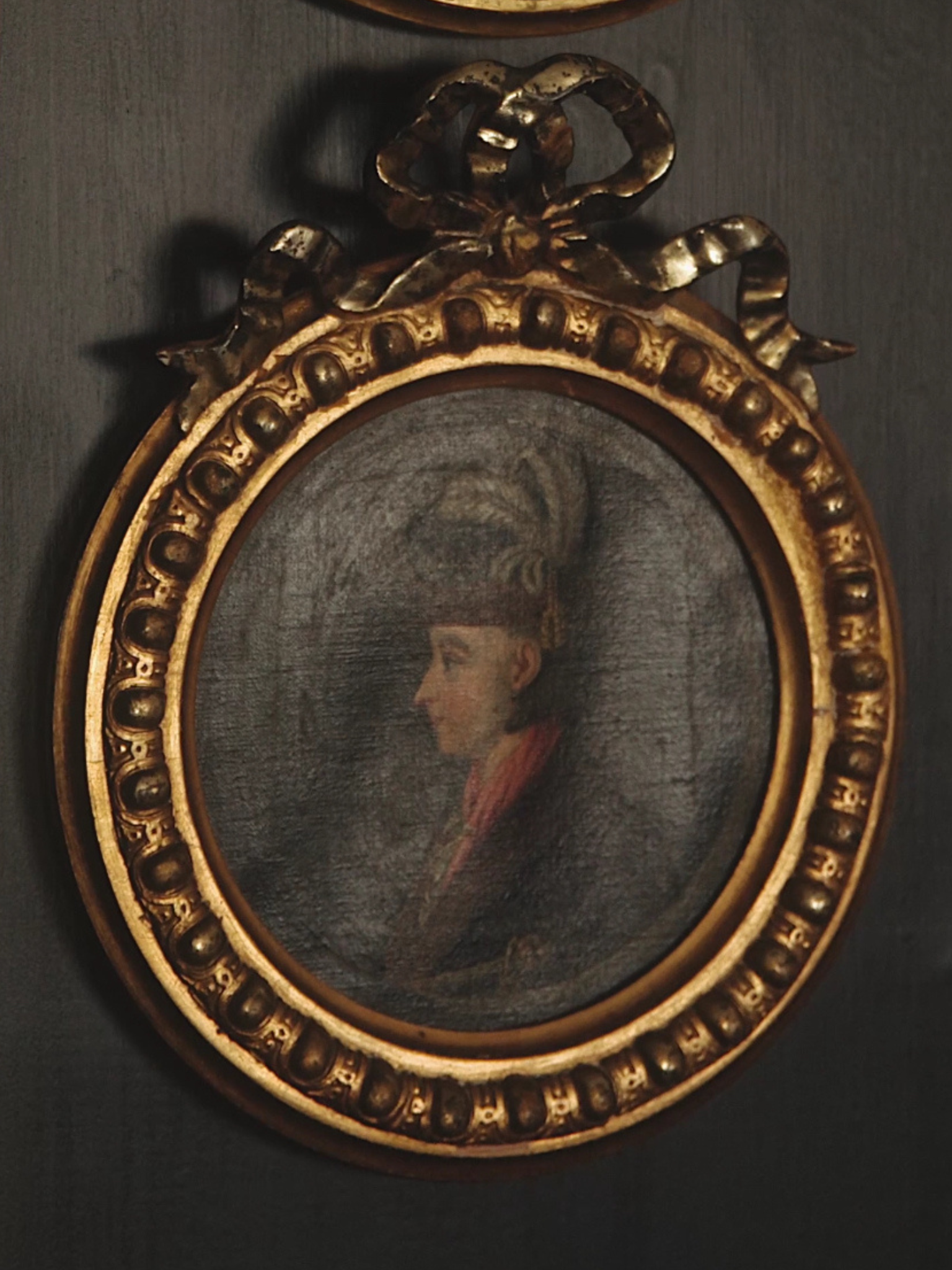
Pair of 18th-Century Prussian Portraits in Original Gilt Ribbon Frames – Geldern Family
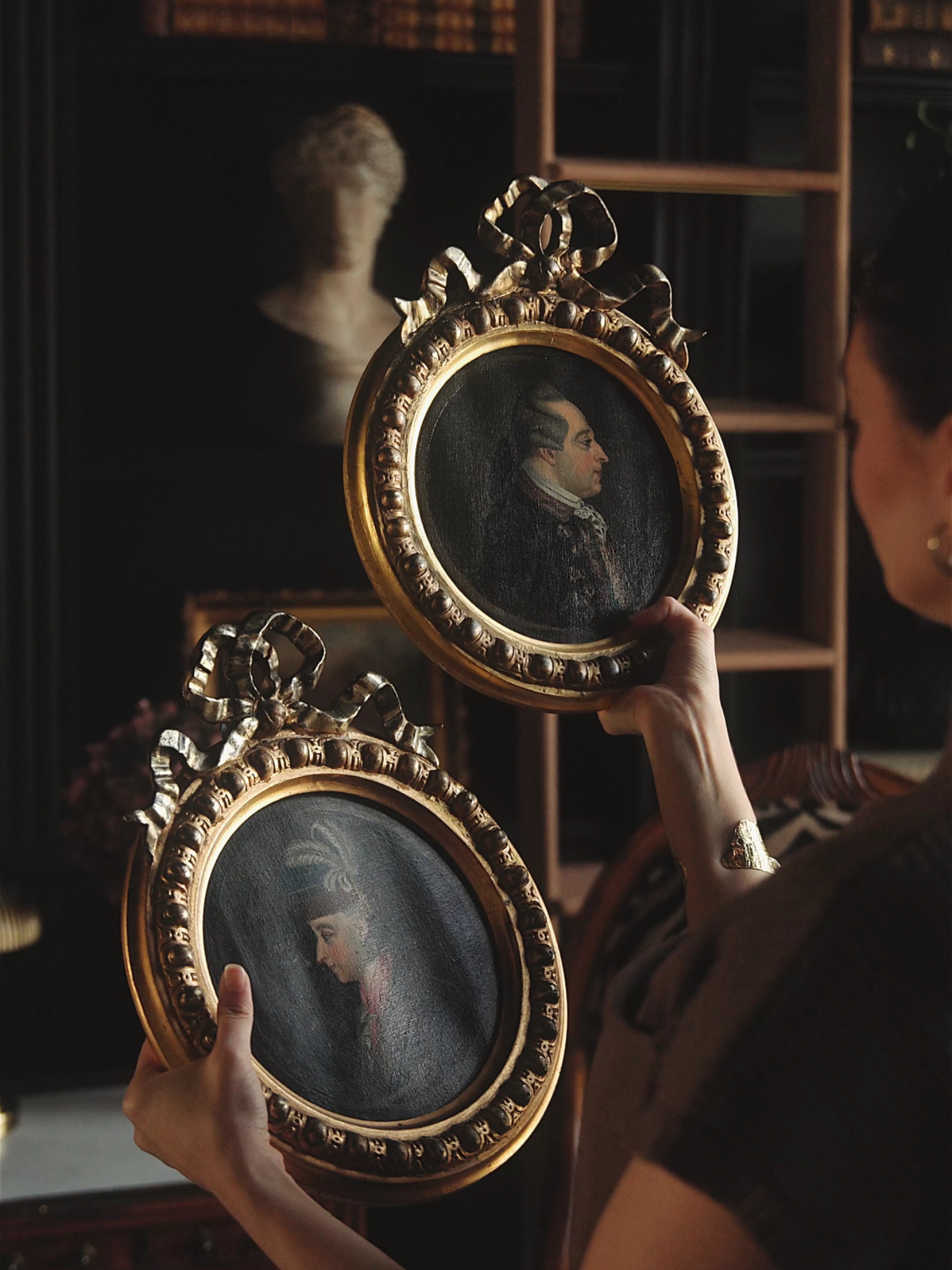
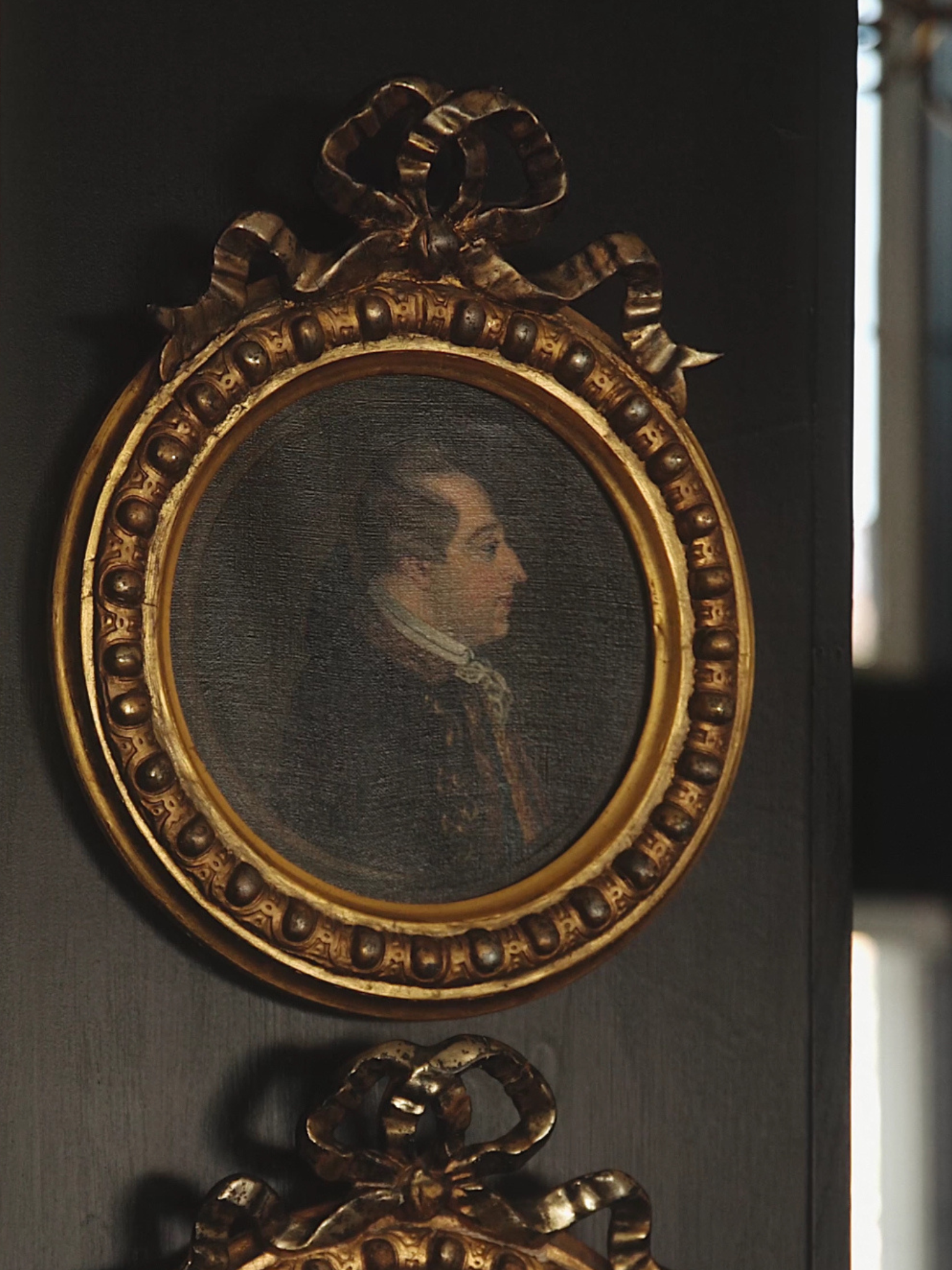
A stately pair of 18th-century oval portraits depicting finely dressed gentlemen in profile, each presented in its original carved and giltwood ribbon frame. The portraits show sitters in aristocratic attire — powdered wigs, lace cravats, and richly detailed coats — painted in the distinctive late-Baroque / early Neoclassical style.
The reverse of each frame bears handwritten genealogical records in German, linking the works to the Gelder(n) family of Prussia. Names such as Rudolf Gelder(n), Heinrich August Gelder(n), Hofrat in Burgk and others born between the 1760s–1780s strongly indicate these were created as family commissions, preserving lineage and social standing.
Such portraits were often displayed together in grand homes, either in portrait galleries or more intimate studies, serving as enduring reminders of ancestry and rank. The frames, with their carved ribbon crests and beaded ornamentation, are characteristic of Continental portrait mounts of the late 18th century.
Origin & Era
- Likely German (Prussian states)
- Late 18th century (c. 1770–1790)
- Sitters identified as members of the Gelder(n) family, per verso inscriptions
Materials
- Oil on canvas, later relined
- Original carved giltwood ribbon frames with beaded detail
- Handwritten genealogical notes affixed verso
Condition
Both portraits remain in very good antique condition with minor craquelure, surface wear, and light gilt losses to the frames, consistent with age. Notes and inscriptions on the back provide rare provenance documentation.
Styling Notes
- Display as a pair for maximum impact in a library, dining room, or gallery wall.
- Their aristocratic profiles lend a sense of formality and history, perfect for moody interiors or alongside other gilt-framed works.
- Style with antique books, busts, or candlelight to enhance their Old World gravitas.
History Notes
On the reverse of each frame are extensive handwritten genealogical notes documenting the identities of the sitters. One inscription names Heinrich August Geldern, described as “Fürstlich Russisch Planisch Commissar und Antmann in Burgh” (Princely Russian District Commissioner and administrative officer in Burgh). The other references Rudolf Geldern, recorded as “Resf. Rat und Antmann” (Councillor and Antmann), alongside a detailed list of family members born between 1763 and 1780.
The portraits themselves align with this timeframe: the gentlemen wear powdered wigs styled in the queue and rolled curls fashionable in the 1770s–1790s, along with high-collared coats and a feathered tricorn hat typical of the era. The painting style — restrained profiles against shadowed grounds — reflects late Baroque transitioning into Neoclassical taste.
Their oval giltwood frames with ribbon crests and beaded borders are also consistent with the Louis XVI / German neoclassical style popular in the late 18th century.
Taken together, the genealogical inscriptions, costume details, painting technique, and frame design firmly place these works in the late 18th century (c.1770–1790). The preserved records not only identify the sitters as members of the Geldern family but also elevate the portraits into important documented heirlooms of Prussian lineage.
Choose options
